

 EN
Recently, the national standard "Test Method for Civil Light and Small Multi rotor Unmanned Aerial Vehicle Nest System" (GB/T 47818-2026), jointly developed by Zhongke Cloud Atlas, has been officially released and will be implemented from February 1, 2027.
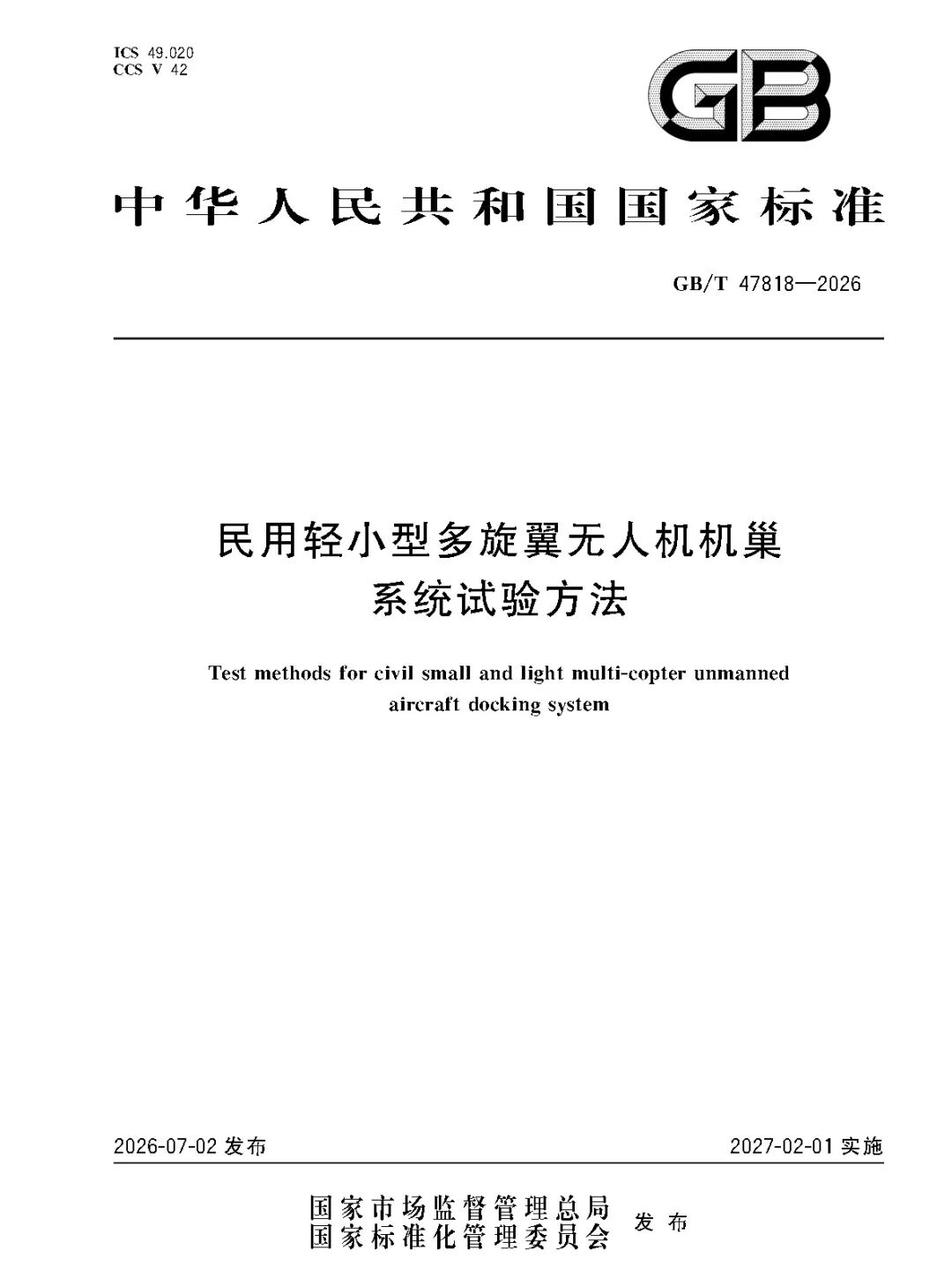
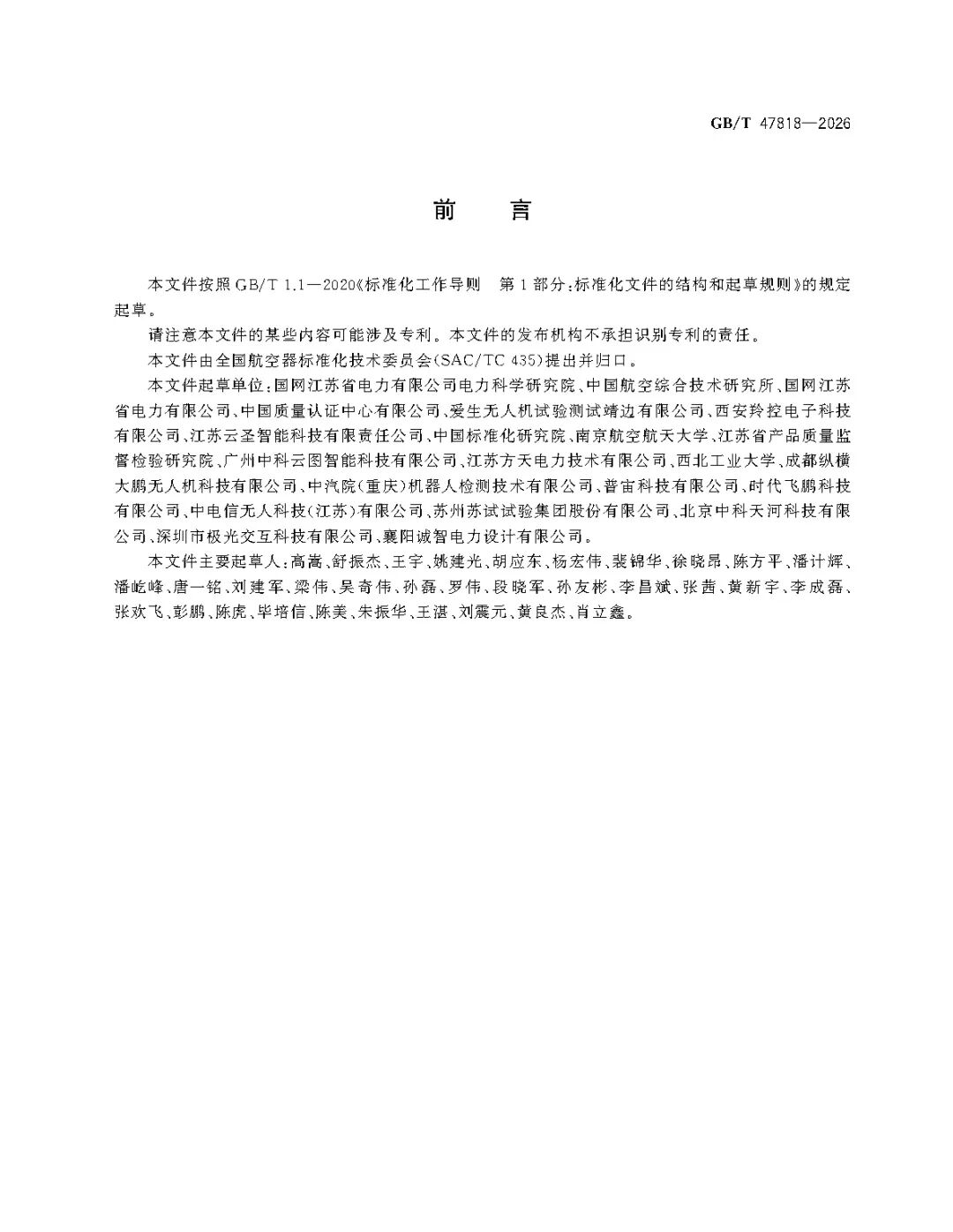
This standard is the first national standard developed for unmanned aerial vehicle nest systems in China, filling the gap of high-level standards in this field.
The fully automated drone nest, as the core infrastructure for low altitude unmanned operations, has been widely used in scenarios such as power inspection, urban security, and emergency monitoring. The introduction of this national standard fills the gaps in the industry's testing and inspection system.
Zhongke Yuntu has profound technical accumulation and industrial practice in the field of unmanned aerial vehicle nests. Since its establishment in 2017, the company has built three core systems: a low altitude remote sensing network, a low altitude route network, and a low altitude large model, using the independently developed "Cloud Nest" series of unmanned aerial vehicle intelligent base stations as the carrier.
From the production of the first unmanned aerial vehicle (UAV) intelligent nest in 2019 to the mass production of the new generation of nest products, the team has overcome key technologies such as centimeter level precision landing in complex UAV environments, automatic charging and swapping of robotic arms, all-weather operation, and cloud remote scheduling, enabling UAVs to truly achieve fully autonomous operation.
At present, thousands of unmanned aerial vehicle nests of Zhongke Cloud Map have been deployed nationwide, widely used in fields such as energy inspection and urban comprehensive governance. For example, in the field of energy, related technologies have served more than 1200 substations and converter stations across the country, inspecting over 100000 kilometers of power lines, and improving inspection efficiency by more than 50 times compared to manual labor.
This standard is under the jurisdiction of the National Aircraft Standardization Technical Committee, and is jointly developed by research institutions, testing agencies, and multiple upstream and downstream units in the industry chain. After the implementation of the standard, it will further improve China's unmanned aerial vehicle standard system, enhance the reliability and safety of civil unmanned aerial vehicle nest products, and lay a solid foundation for the safe, orderly, and large-scale development of low altitude economy.